Allford Hall Monaghan Morris

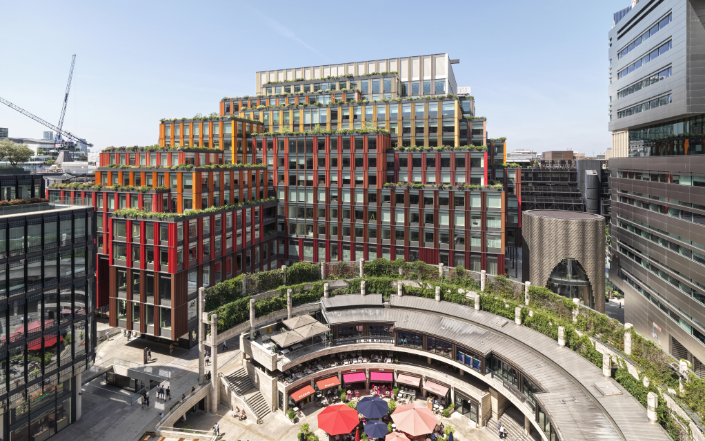
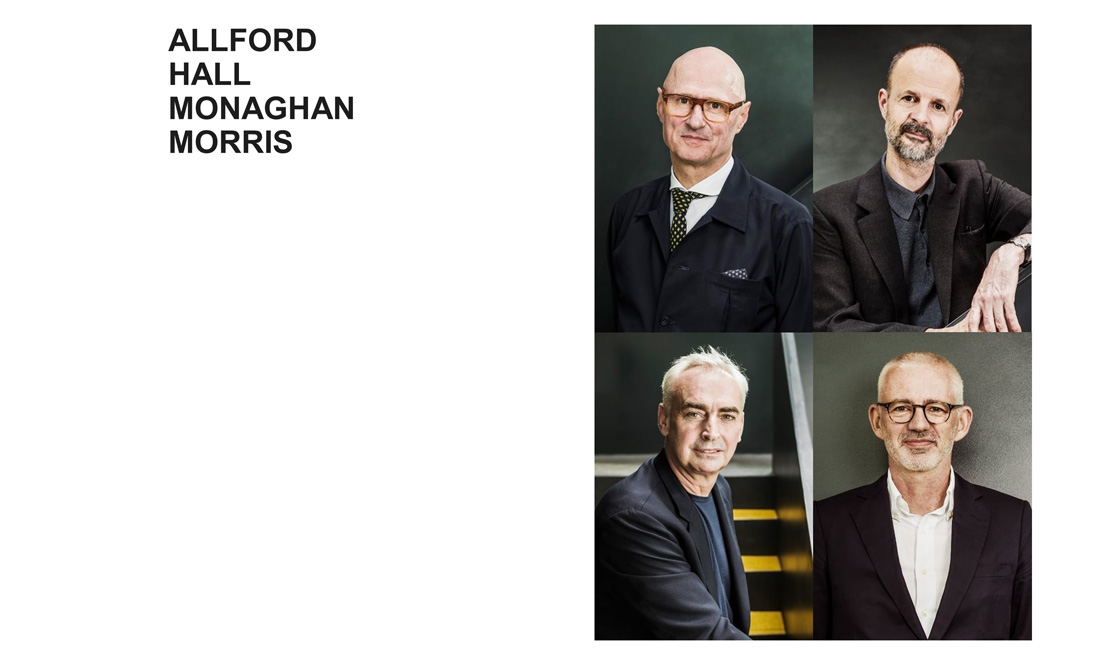
From the founders’ earliest collaboration at university to now, more than 30 years later, Allford Hall Monaghan Morris has been based on a firm commitment to the design of buildings of economy, elegance and delight: buildings that reflect a continuing belief in the ability of outstanding architecture to last through time; buildings whose success is defined not just by the use for which they were commissioned, but by their ability to adapt to different uses; buildings that aim to make a positive and lasting contribution to the city around them; buildings that form the backdrop to the city and the theatre of everyday life, but that can be, in themselves, extraordinary.

The principal focus of the practice, therefore, has been the design of everyday buildings in the city. It is their belief that such buildings can, through intelligent design and a professional methodology, be made extraordinary.

More than 30 years on the field have strengthened their fundamental principles:

  • the work should be driven by a strategic approach to design which recognises that changes in circumstance and context, both during the design and during the life of the building, are inevitable
  • the work should address and enhance its relationship with both the public it serves and the public spaces that surround it, not least by bringing visual delight
  • the work should do more with less; set the best standards of design, regardless of cost or programme; and be open-minded, generous of spirit and ever optimistic
  • the focus is architecture – and the endless testing of the boundaries of its application.

Botanic Place

Botanic Place

Sustainable architecture for a new urban campus

Project Specs

Location: Cambridge

Client: Railpen 

Contractor: Skanska UK

Status: on site

SEE ON STREETVIEW

Technology

Botanic Place

Systems

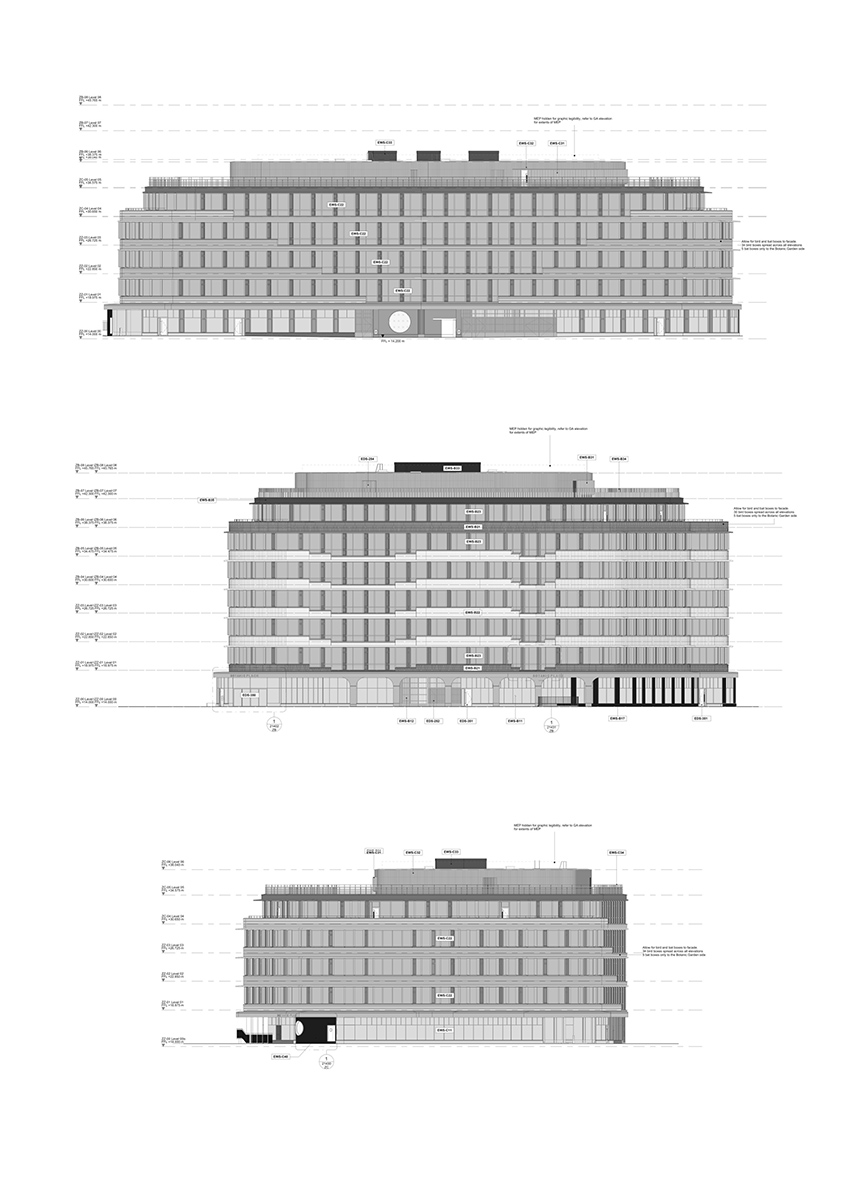
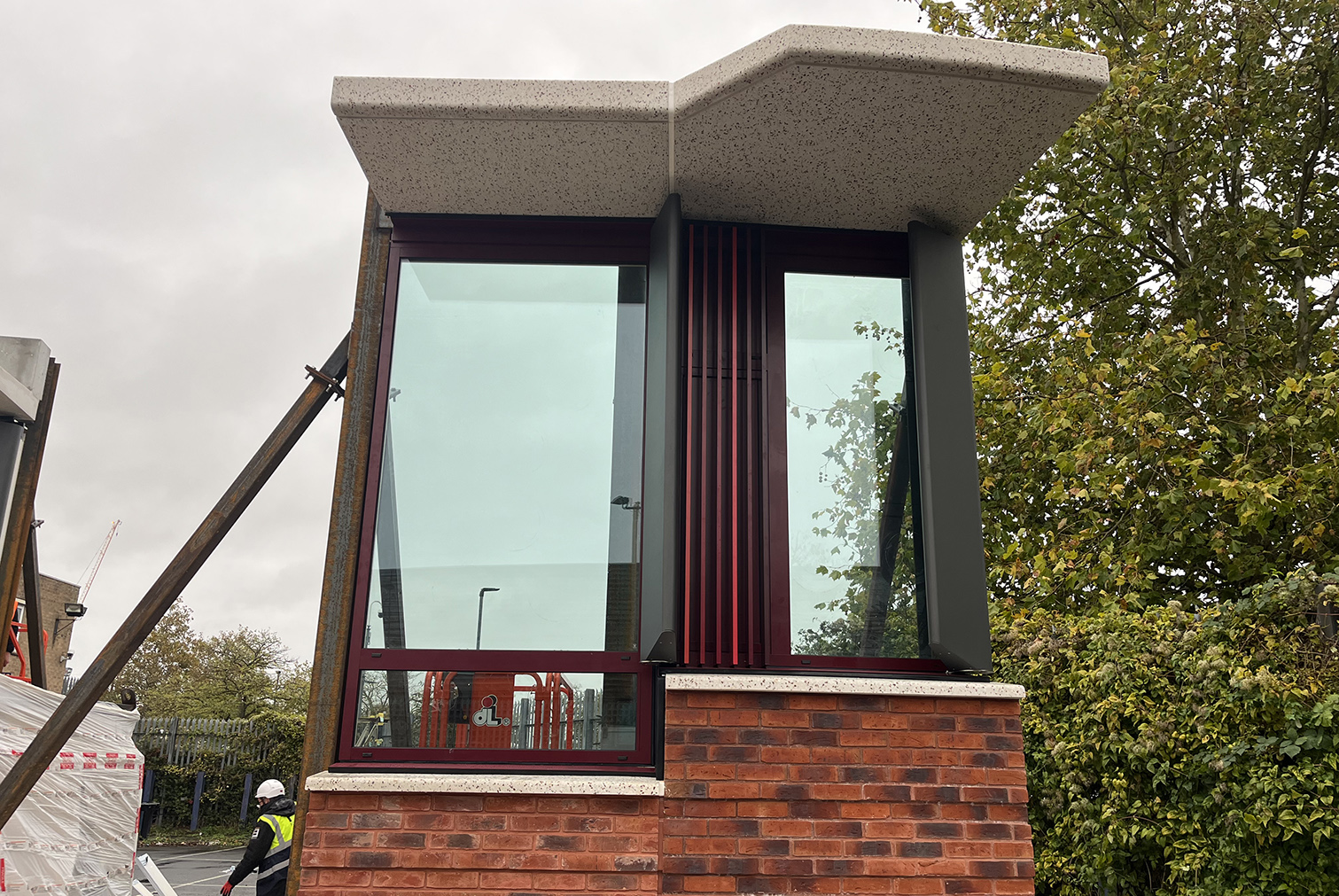
1_Ribbon façade consisting of approximately nr. 1.600 units, either fully vision or equipped with automatic purge vents (covering a total area of around 5,700 m²). The purge units feature external fins ribbed cladding, and a large external brise-soleil fin with variable inclination.

2_Stick façade at ground floor levels with external aluminium fins ribbed cladding.

3_Stick façade on the roof levels with external aluminium fins.

4_Aluminium soffit with a stone-effect coating.

5_Granite kicker-plate at ground floor level.
 

Process

Designed by

Allford Hall Monaghan Morris

Live Project

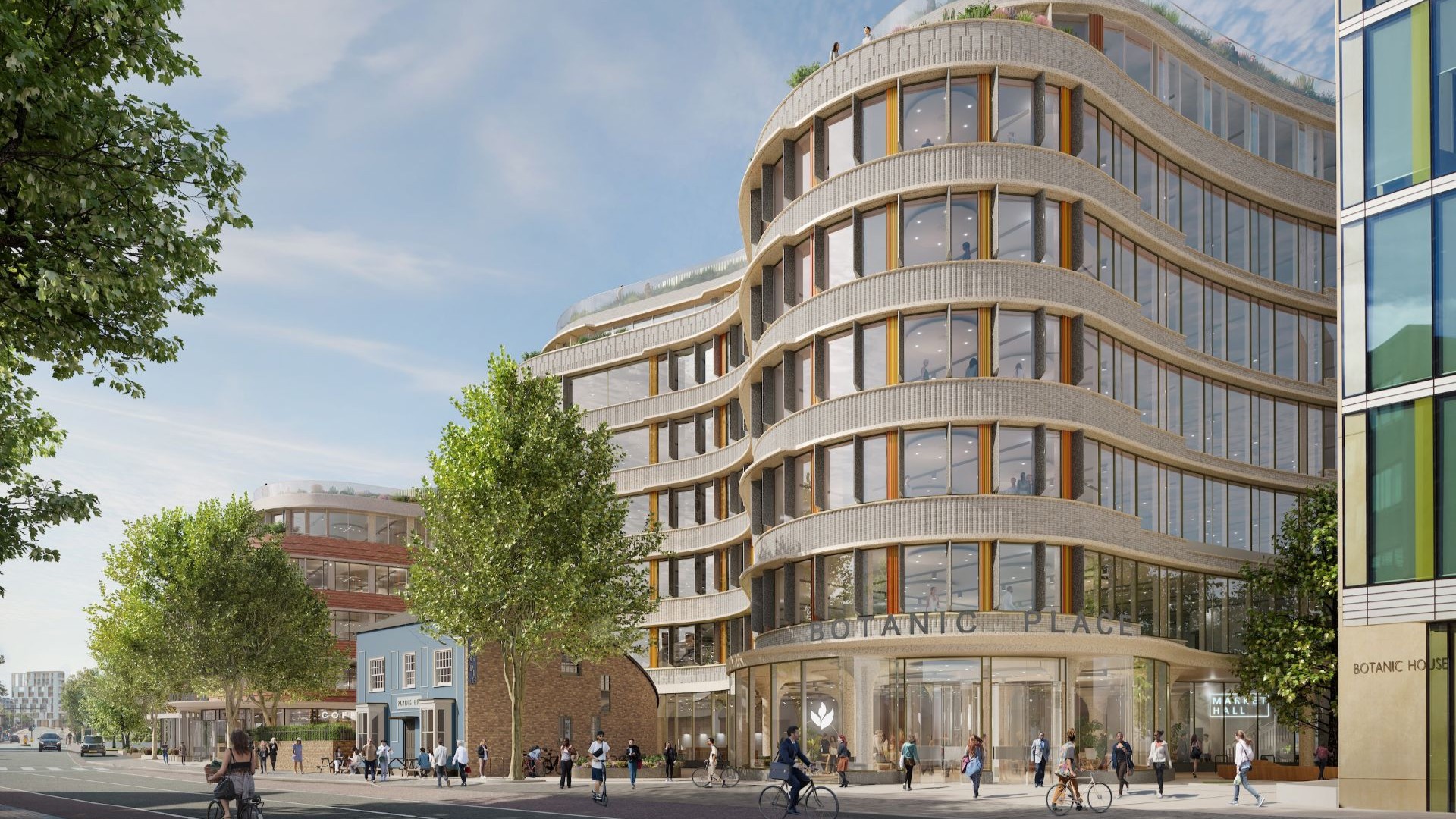
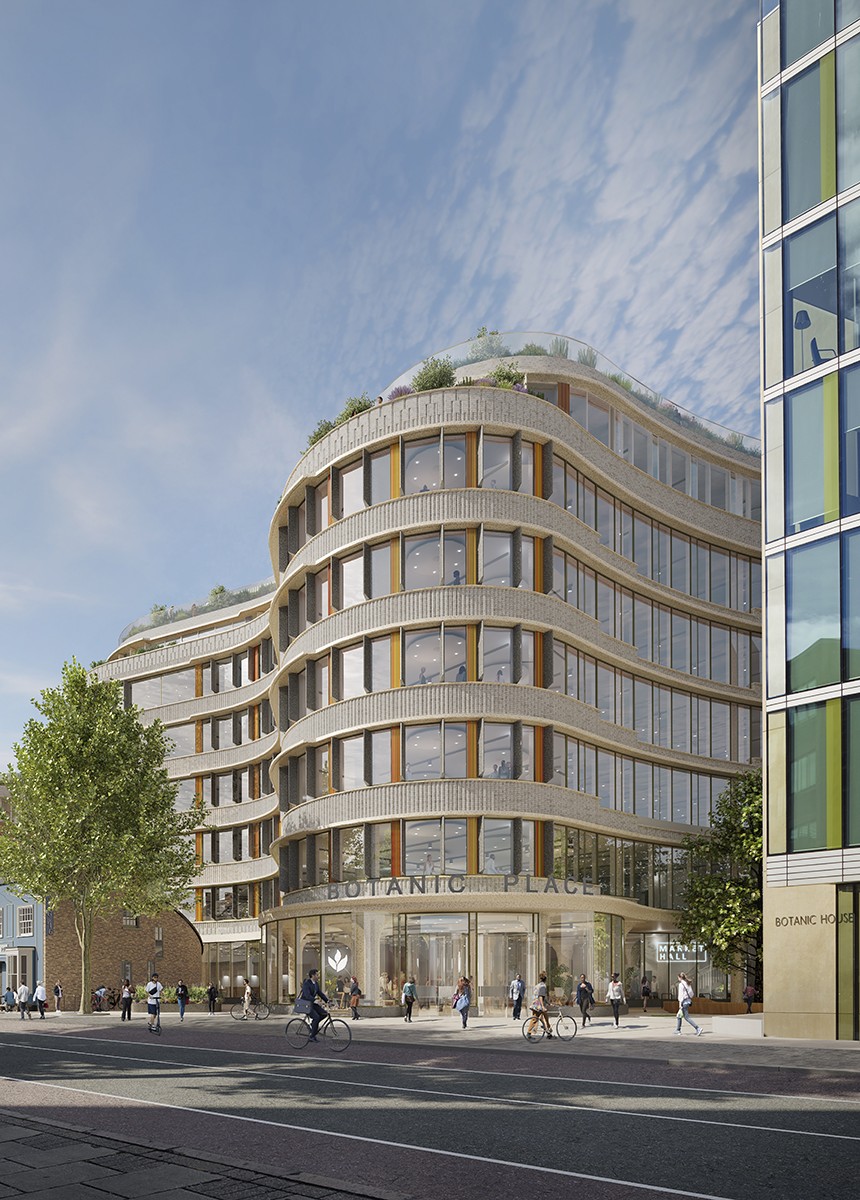
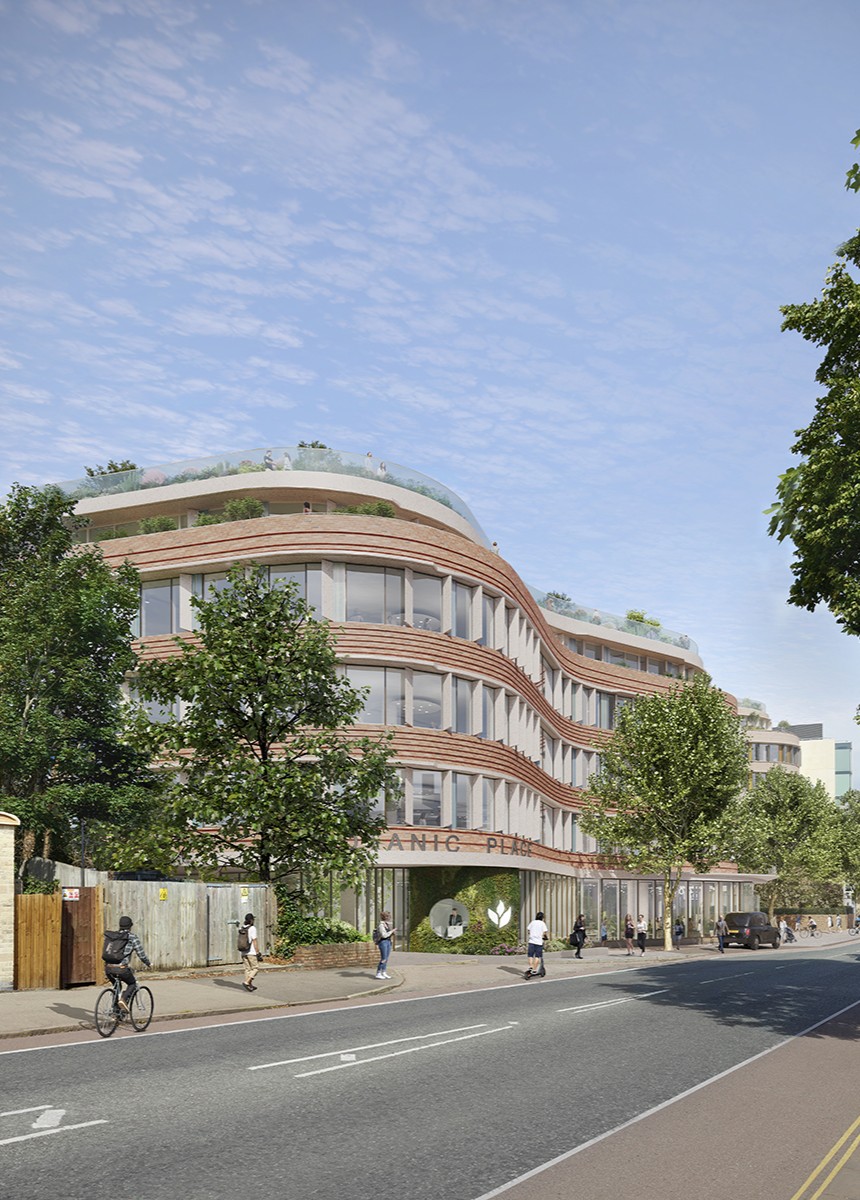
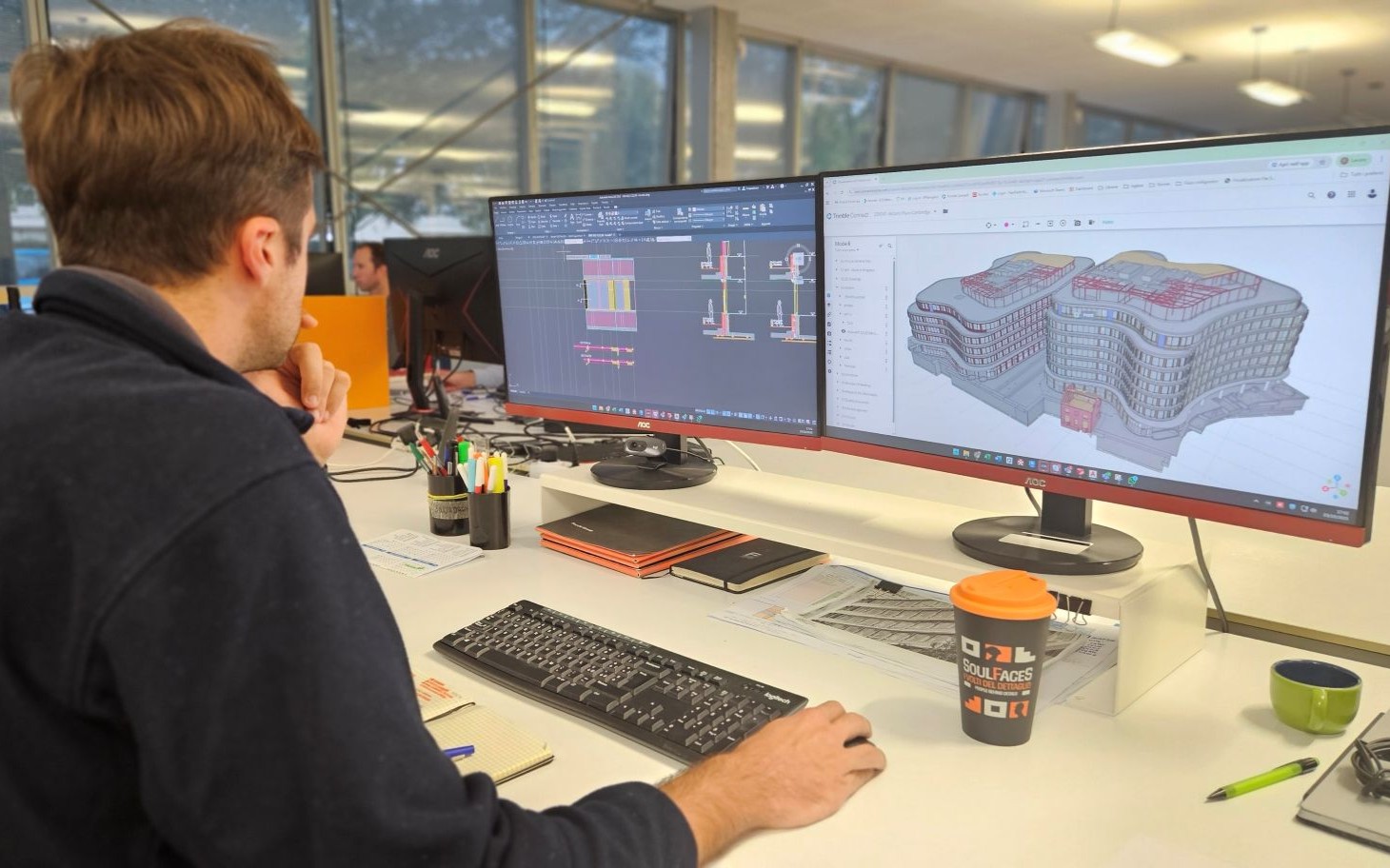
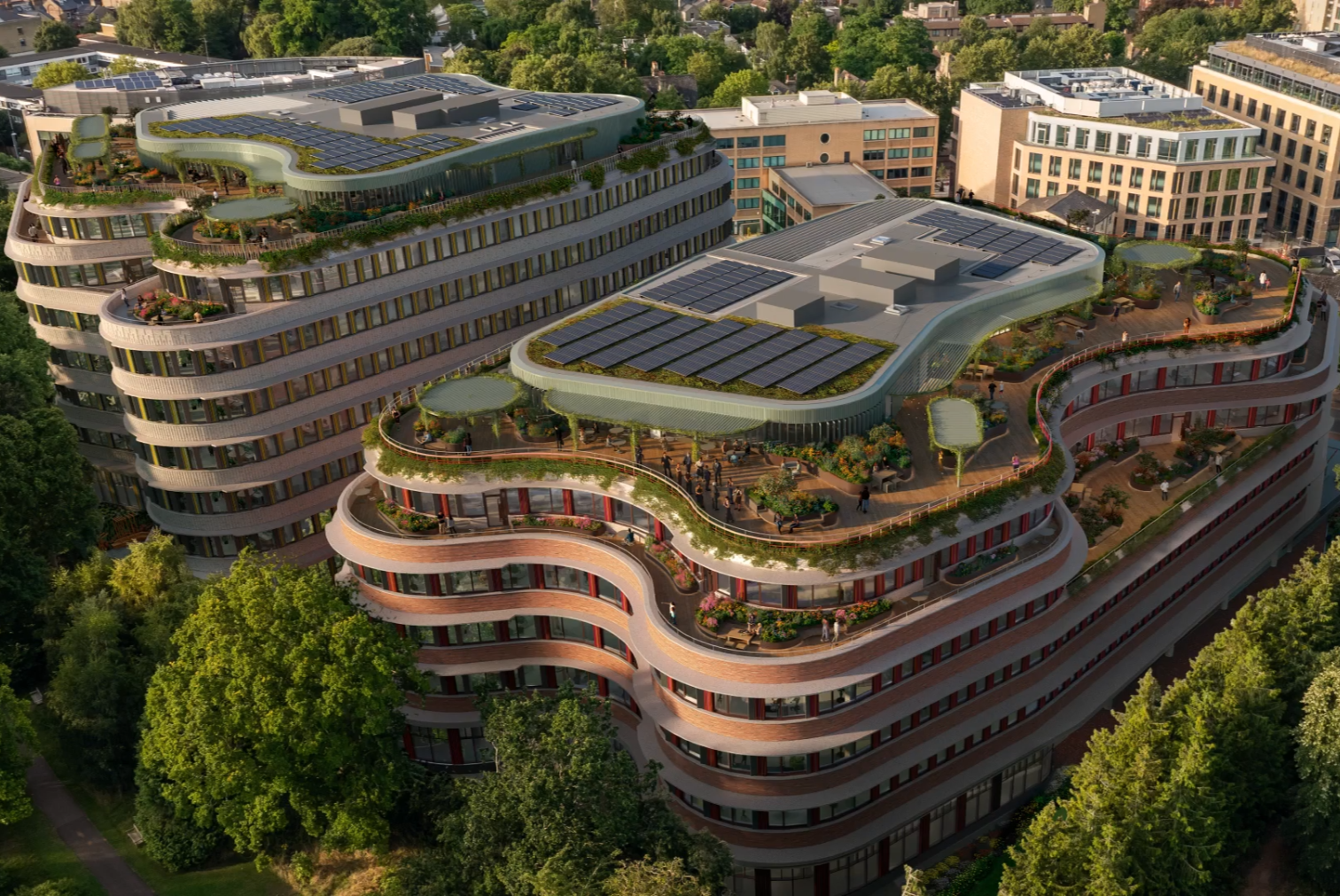
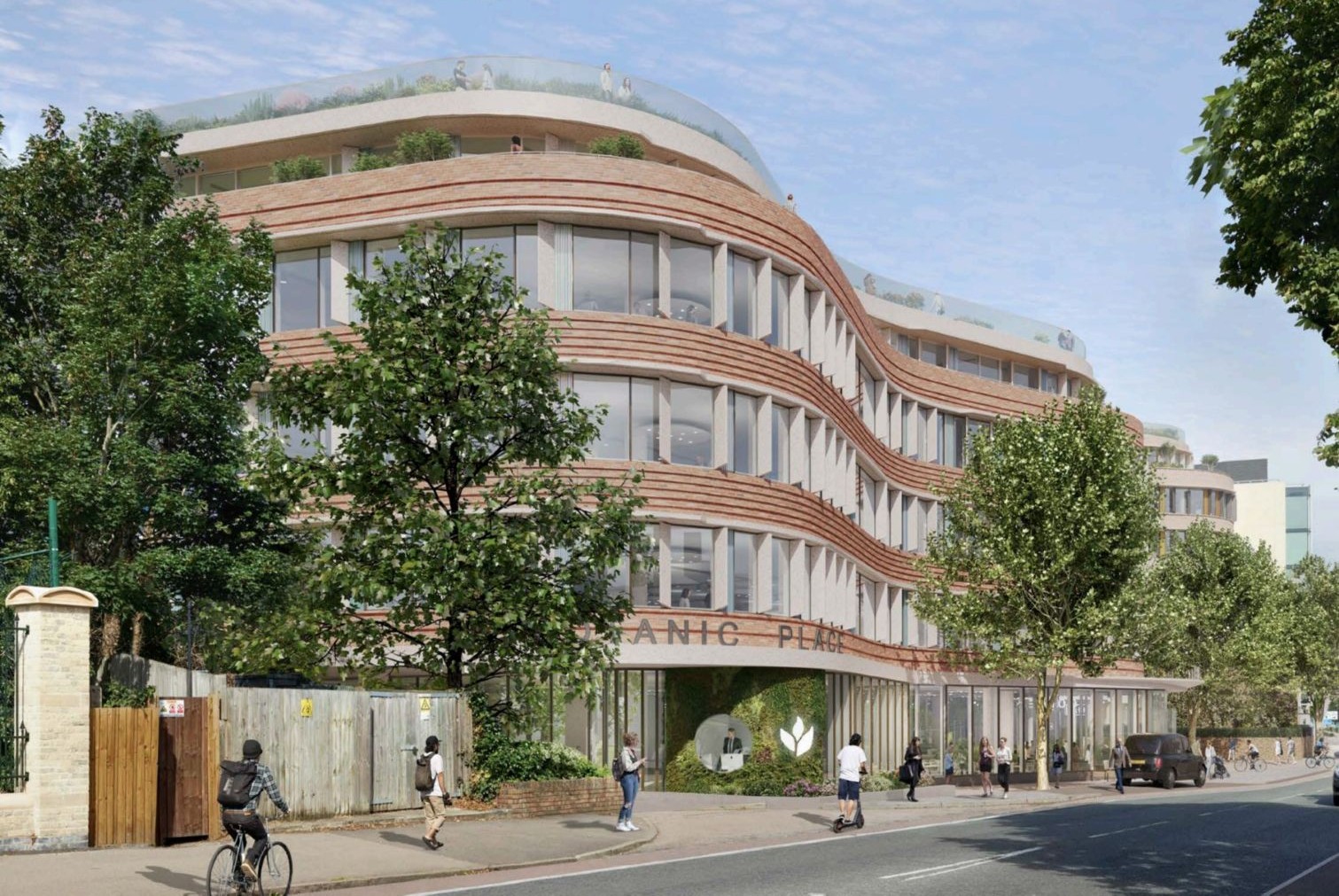
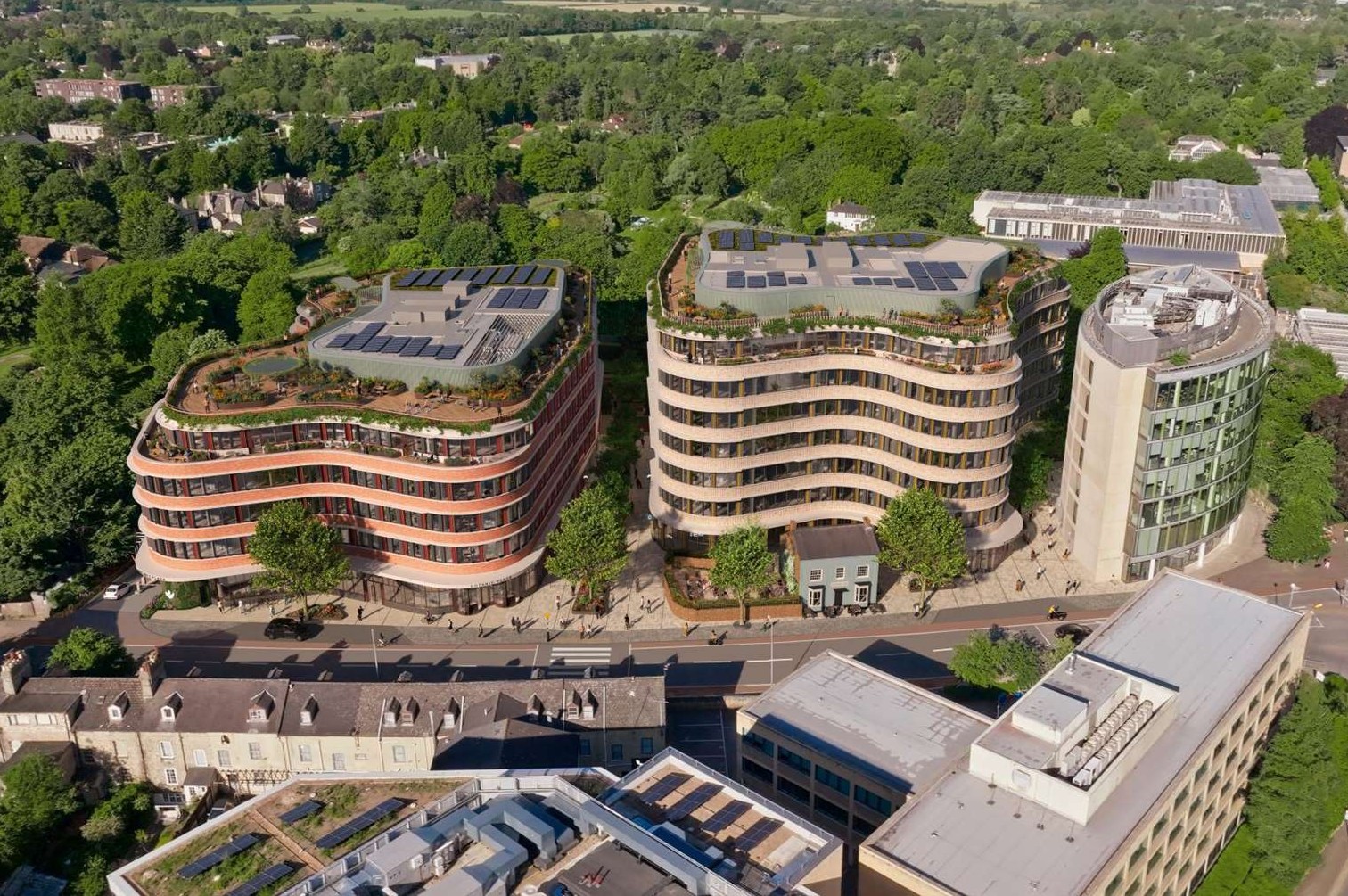
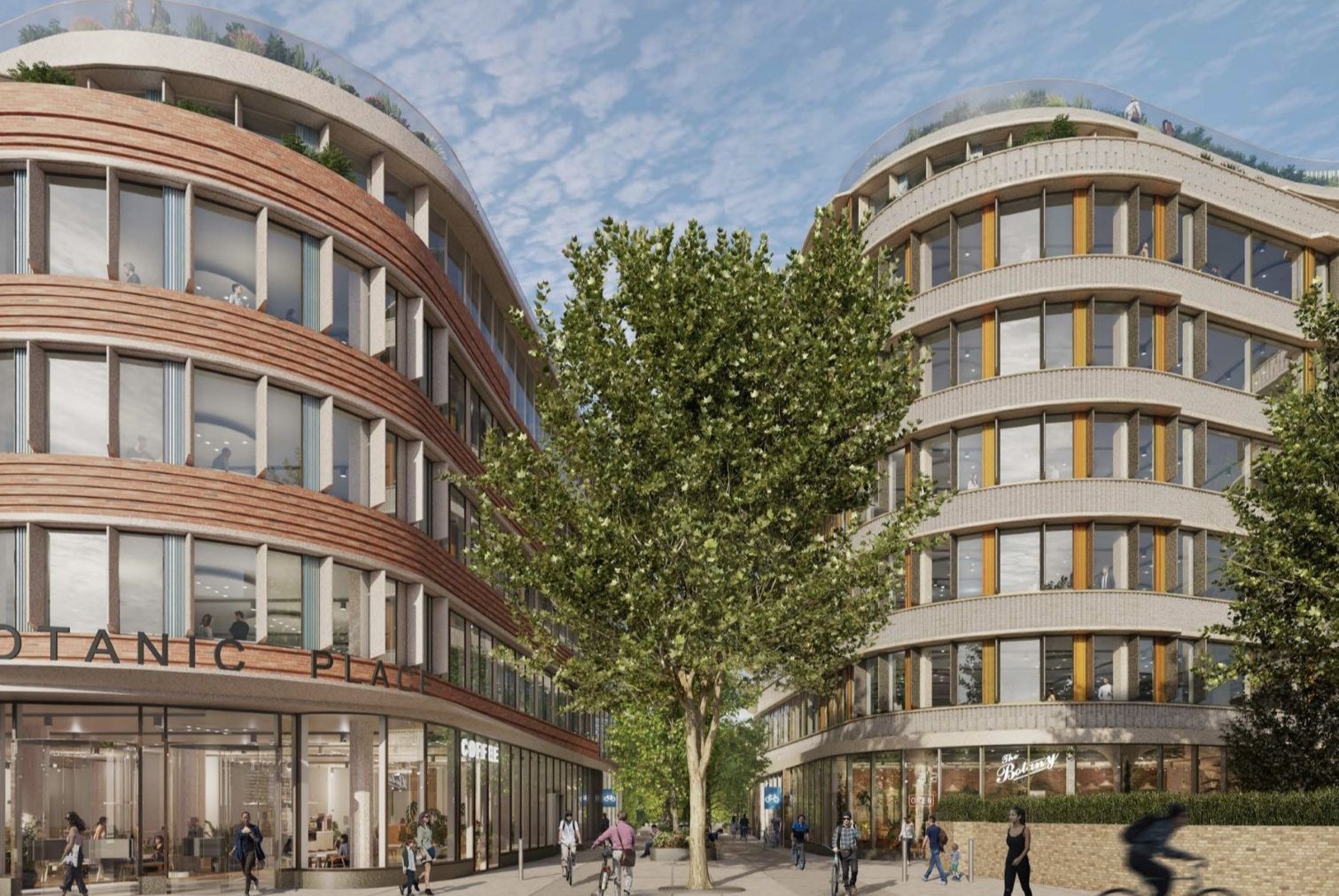
The Botanic Place project in Cambridge, developed by Socius and designed by Allford Hall Monaghan Morris (AHMM), represents a new urban landmark adjacent to the Cambridge University Botanic Garden. The development, comprising two high-quality office buildings and public spaces connected to the Botanic Garden, is conceived as a model of sustainable architecture and environmental wellbeing.

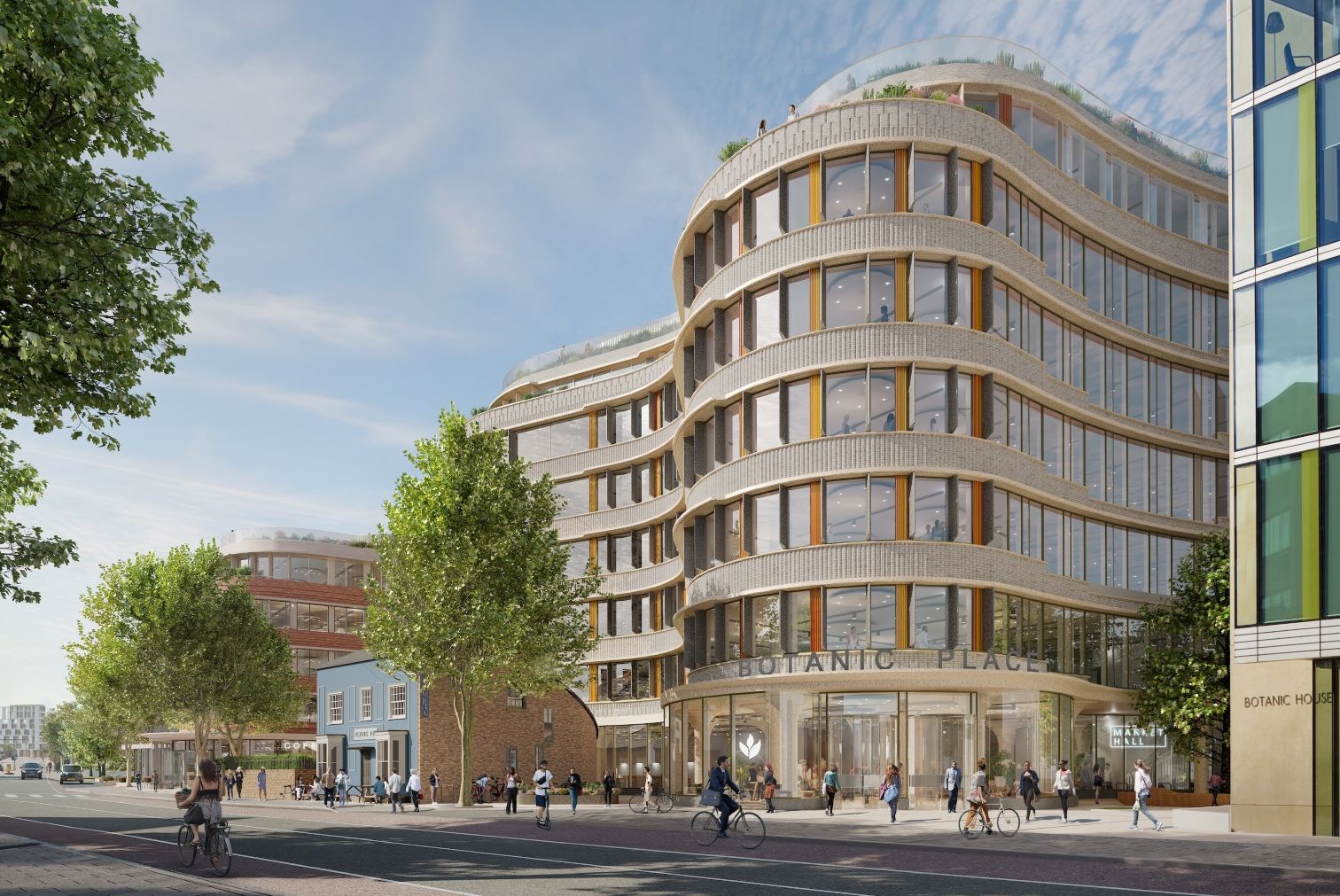
The façades form the project’s defining element: characterised by soft lines and a continuous horizontal rhythm, they combine large glazed areas with opaque bands in warm tones inspired by natural materials and the surrounding landscape’s light. 

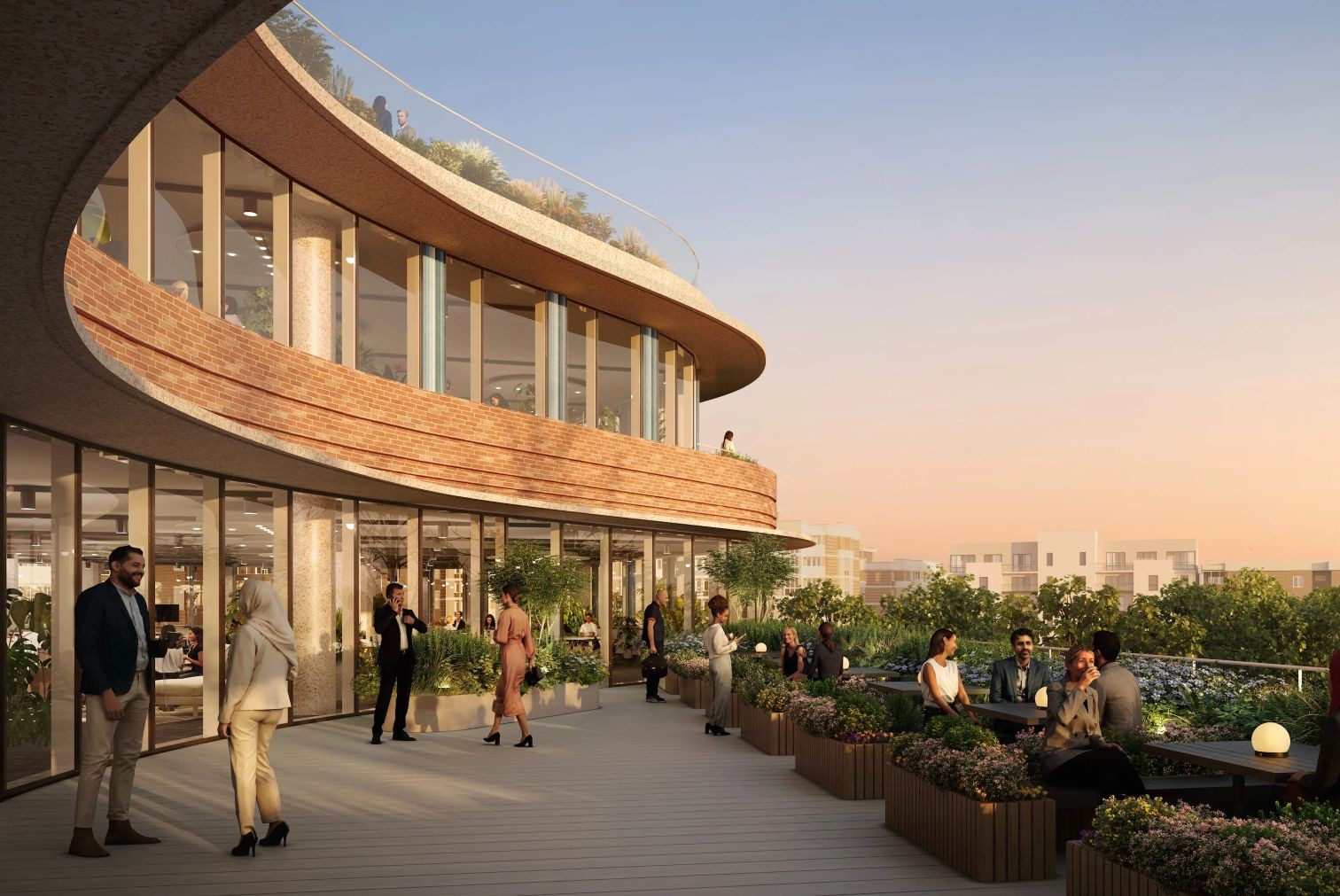
The curved elevations soften the perception of volume, creating a harmonious dialogue with the greenery of the garden and the urban scale of Hills Road. Extensive glazing ensures a direct relationship with the outdoors and maximises natural light penetration, while integrated brise-soleil, balustrades, and terraces enrich the façade’s depth and enhance visual and thermal comfort within the interior spaces. The building envelope has been designed as a high-performance system: efficient insulating materials, low-emissivity glazing, and solar shading enable energy consumption to be reduced by up to 70% compared with a conventional office building. The project has achieved BREEAM Outstanding and WELL Platinum certifications, underscoring its commitment to sustainability and user wellbeing. In summary, Botanic Place presents an architecture in which the façade is not merely a physical boundary, but an active device mediating between city and nature, light and matter, the built environment and quality of life.